


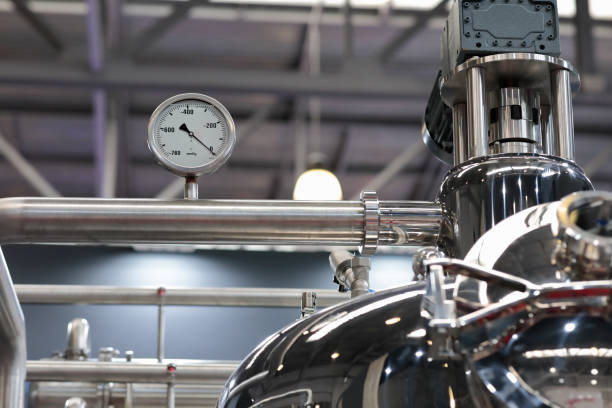
Pressure vessels are among the most important pieces of equipment used in industrial facilities. They are designed to safely contain liquids, gases, steam, and chemicals under pressures significantly different from atmospheric conditions. Pressure vessels are widely used in oil and gas facilities, petrochemical plants, refineries, power stations, pharmaceutical manufacturing, food processing, water treatment, mining, and many other industries.
Because pressure vessels operate under demanding conditions, their design requires strict adherence to internationally recognized engineering standards. The most widely accepted standard is the ASME Boiler and Pressure Vessel Code, Section VIII. This code establishes comprehensive requirements for the design, fabrication, inspection, testing, certification, and documentation of pressure vessels.
Professional pressure vessel engineering combines mechanical design principles, material science, finite element analysis, welding technology, stress analysis, and quality assurance to produce safe, durable, and code-compliant equipment capable of operating reliably throughout its intended service life.
What Is a Pressure Vessel?
A pressure vessel is a closed container specifically designed to hold fluids or gases at pressures that differ from atmospheric pressure.
Typical pressure vessels include:
- Air receivers
- Steam drums
- Heat exchangers
- Separators
- Reactors
- Filters
- Accumulators
- Surge vessels
- Knockout drums
- Process tanks
Each vessel is engineered according to its operating conditions and intended industrial application.
Understanding ASME Section VIII
ASME Section VIII is the internationally recognized code governing pressure vessel design.
The code provides engineering requirements for:
- Design calculations
- Material selection
- Fabrication methods
- Welding procedures
- Inspection
- Non-destructive examination
- Pressure testing
- Certification
- Documentation
- Quality control
Compliance ensures consistent engineering practices and improves operational safety across industrial facilities.
Divisions Within ASME Section VIII
ASME Section VIII consists of multiple divisions.
Division 1
Division 1 provides design rules based on established engineering formulas and conservative safety factors.
It is commonly used for:
- General industrial vessels
- Chemical plants
- Oil refineries
- Water treatment facilities
- Manufacturing plants
Division 2
Division 2 provides more advanced engineering methods.
It includes:
- Detailed stress analysis
- Finite Element Analysis
- Fatigue assessment
- More efficient material utilization
- Higher allowable stresses
Division 2 is frequently selected for complex pressure vessel designs.
Division 3
Division 3 addresses extremely high-pressure vessels used in specialized industrial applications.
Industrial Applications
Pressure vessels designed according to ASME Section VIII are commonly used in:
- Oil and gas processing
- Petrochemical production
- Chemical manufacturing
- Power generation
- Pharmaceutical facilities
- Food processing
- Mining operations
- Pulp and paper plants
- LNG terminals
- Hydrogen production
Every industry presents unique engineering requirements.
Design Pressure
One of the first engineering decisions involves selecting the design pressure.
Engineers consider:
- Normal operating pressure
- Pressure fluctuations
- Safety margins
- Emergency operating conditions
- Relief valve settings
The design pressure must always exceed expected operating pressure.
Design Temperature
Material strength changes with temperature.
Engineering evaluates:
- Operating temperature
- Startup conditions
- Shutdown conditions
- Ambient temperatures
- Thermal cycling
- Fire exposure
Temperature directly influences allowable material stresses.
Material Selection
Choosing the appropriate material is critical for long-term performance.
Engineers evaluate:
- Mechanical strength
- Corrosion resistance
- Weldability
- Fracture toughness
- High-temperature properties
- Low-temperature performance
Common materials include:
- Carbon steel
- Stainless steel
- Alloy steel
- Duplex stainless steel
- Nickel alloys
- Titanium alloys
Material selection depends on service conditions and process requirements.
Vessel Geometry
Pressure vessels are manufactured in various shapes.
Common configurations include:
- Vertical vessels
- Horizontal vessels
- Cylindrical vessels
- Spherical vessels
- Jacketed vessels
- Multi-compartment vessels
Geometry affects stress distribution and fabrication complexity. Pressure Vessel Design provides valuable engineering knowledge for industrial equipment.
Shell Design
The shell forms the primary pressure boundary.
Engineering calculations determine:
- Wall thickness
- Allowable stress
- Corrosion allowance
- Manufacturing tolerances
- Weld efficiency
Proper shell design ensures safe containment of internal pressure.
Head Design
Pressure vessel heads close both ends of the shell.
Common head types include:
- Elliptical heads
- Hemispherical heads
- Torispherical heads
- Flat heads
Each head type offers different advantages depending on pressure and fabrication requirements.
Nozzle Design
Pressure vessels contain numerous nozzles for process connections.
Engineering evaluates:
- Internal pressure
- External piping loads
- Reinforcement requirements
- Local stresses
- Thermal expansion
- Weld design
Nozzle analysis is especially important for highly loaded process equipment.
Support Design
Pressure vessels require properly engineered support systems.
Support types include:
- Saddle supports
- Skirt supports
- Leg supports
- Lug supports
- Bracket supports
Support selection depends on vessel orientation and operating conditions.
Wind and Seismic Design
Outdoor pressure vessels experience environmental loading.
Engineering considers:
- Wind pressure
- Earthquake acceleration
- Foundation interaction
- Structural stability
- Overturning resistance
These analyses are essential for safe operation in exposed environments.
Welding Requirements
ASME Section VIII establishes detailed welding requirements.
These include:
- Qualified welding procedures
- Certified welders
- Weld inspection
- Weld documentation
- Heat treatment requirements
High-quality welding directly affects vessel safety.
Non-Destructive Examination
Pressure vessels undergo rigorous inspection.
Common inspection methods include:
- Radiographic testing
- Ultrasonic testing
- Magnetic particle inspection
- Dye penetrant testing
- Visual inspection
These methods detect hidden defects without damaging the vessel.
Hydrostatic Testing
Every completed vessel typically undergoes hydrostatic testing.
The test verifies:
- Structural integrity
- Leak tightness
- Weld quality
- Pressure resistance
Hydrostatic testing is an important step before placing the vessel into service.
Finite Element Analysis
Modern pressure vessel engineering frequently uses Finite Element Analysis.
Applications include:
- Nozzle reinforcement
- Local stress analysis
- Fatigue evaluation
- Complex geometry
- High-pressure equipment
- Division 2 compliance
Finite Element Analysis provides highly accurate stress predictions.
Fatigue Assessment
Repeated pressure and temperature cycles can cause fatigue damage.
Engineers evaluate:
- Pressure cycling
- Thermal cycling
- Startup frequency
- Shutdown frequency
- Vibration effects
Fatigue analysis improves long-term reliability.
Corrosion Allowance
Corrosion gradually reduces wall thickness during operation.
Engineering includes additional thickness to compensate for:
- Internal corrosion
- External corrosion
- Chemical attack
- Erosion
- Environmental exposure
Proper corrosion allowance extends service life.
Pressure Relief Protection
Pressure vessels require overpressure protection.
Typical devices include:
- Safety relief valves
- Rupture disks
- Pressure relief systems
- Emergency venting systems
These devices protect both personnel and equipment.
Quality Assurance
Professional engineering includes comprehensive quality control.
Typical activities include:
- Material certification
- Welding documentation
- Dimensional inspection
- Pressure testing
- Code verification
- Final engineering review
Quality assurance ensures compliance throughout fabrication.
Documentation
Pressure vessel projects generate extensive documentation.
Typical records include:
- Design calculations
- Material certificates
- Welding records
- Inspection reports
- Pressure test reports
- Manufacturing drawings
- Nameplate information
- ASME certification documents
Accurate documentation supports future inspections and maintenance.
Maintenance Considerations
Regular maintenance extends equipment life.
Inspection programs often evaluate:
- Corrosion
- Cracking
- Weld condition
- Coating integrity
- Nozzle condition
- Support condition
- Foundation settlement
Preventive maintenance reduces unexpected failures.
Benefits of ASME Section VIII Compliance
Designing pressure vessels in accordance with ASME Section VIII offers numerous advantages for industrial facilities.
Enhanced Safety
The ASME code establishes proven engineering practices that help prevent vessel failures caused by excessive pressure, material defects, or design errors. Compliance significantly improves the safety of personnel and surrounding equipment.
Regulatory Acceptance
ASME-certified pressure vessels are widely recognized by regulatory authorities, insurance providers, and industrial clients throughout North America and many international markets. This simplifies approval processes and project acceptance.
Reliable Mechanical Performance
Code-compliant designs ensure that pressure vessels can safely withstand internal pressure, external loads, thermal expansion, and operational stresses throughout their intended service life.
Improved Material Selection
ASME Section VIII specifies approved materials with verified mechanical properties, helping engineers select materials appropriate for pressure, temperature, corrosion, and process conditions.
Consistent Manufacturing Quality
Strict fabrication requirements, qualified welding procedures, and comprehensive inspections ensure that every pressure vessel is manufactured to a consistently high standard.
Longer Equipment Service Life
Proper design calculations, corrosion allowances, and quality construction reduce premature deterioration and contribute to extended equipment lifespan.
Reduced Maintenance Costs
Well-designed pressure vessels experience fewer operational problems, reducing repair expenses, inspection frequency, and production interruptions over time.
Better Resistance to Environmental Loads
Engineering evaluations for wind, seismic activity, vibration, and thermal loading improve the vessel’s ability to operate safely in demanding industrial environments.
Advanced Stress Analysis
For complex applications, ASME Section VIII Division 2 allows detailed stress analysis and finite element modeling, improving design efficiency while maintaining high safety standards.
Increased Operational Reliability
Reliable pressure vessels support continuous plant operation, reducing unexpected shutdowns and improving production efficiency.
Modern Engineering Technologies
Pressure vessel engineering continues to evolve with advanced digital tools.
Current technologies include:
- Three-dimensional CAD modeling
- Building Information Modeling
- Finite Element Analysis
- Computational Fluid Dynamics
- Digital twin technology
- Automated stress analysis
- Laser scanning
- Cloud-based engineering collaboration
- Predictive maintenance systems
- Artificial intelligence-assisted inspection
These technologies improve design accuracy while reducing engineering time and project costs.
Conclusion
Pressure vessel design in accordance with ASME Section VIII is essential for ensuring the safety, reliability, and efficiency of industrial operations. From material selection and shell calculations to nozzle reinforcement, welding procedures, inspection, and pressure testing, every aspect of the design process is governed by rigorous engineering principles and internationally recognized standards. Professional engineering not only ensures regulatory compliance but also enhances equipment performance, minimizes operational risks, reduces maintenance costs, and extends the service life of critical assets. By applying ASME Section VIII requirements together with modern analysis tools and quality assurance practices, industrial organizations can confidently operate pressure vessels in demanding environments while maintaining the highest standards of safety and reliability.
